Seattle City Council: District 5
Meet the Candidates
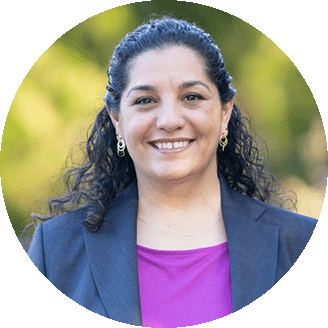
Nilu Jenks
Rating: Somewhat aligned
neighborsfornilu.org
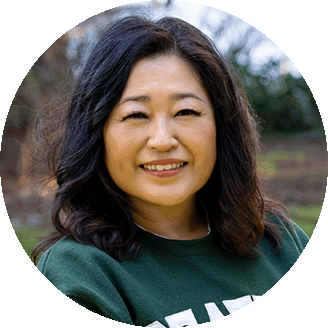
Julie Kang
Rating: Aligned
julieforseattle.com
Question 1
Business Taxes: Would you increase, decrease, maintain, or otherwise change the JumpStart payroll expense tax? Why?
» next / all
Nilu Jenks
I would maintain the JumpStart payroll expense tax. It was created to fund important priorities including affordable housing, equitable development, Green New Deal investments, and support for small businesses. Previous City budgets have relied on some of that revenue to help address general fund deficits. I would like to see us move toward using JumpStart revenue for the purposes it was intended to support.
We have a significant housing and homelessness crisis, and JumpStart provides an important revenue source to help address it. I would not take this money away while there are 20,000 homeless in the Puget Sound area. I wish we had taken action sooner and been more responsible with taxpayer’s money. I think we need to use the resources we already have responsibly, protect the investments we have committed to, and demonstrate that we are delivering results with taxpayer dollars.
At the same time, I recognize that businesses have choices about where they locate and grow, and we need Seattle to remain a place where businesses want to invest and create jobs. As I have stated before, I would not support expanding the payroll expense tax during a recession. Economic conditions matter, and during a downturn we should be particularly mindful of the pressures businesses and workers are already facing.
Julie Kang
I would maintain JumpStart rather than increase it. Seattle needs revenue for priorities such as affordable housing, but we also need employers to continue locating jobs and investing here. Before increasing business taxes, I want the City to demonstrate that existing revenues are producing measurable results and consider the cumulative cost of doing business in Seattle.
My approach comes from experience. I co-founded a community bank in District 5 to serve immigrant entrepreneurs and small businesses that often struggled to access capital. As Audit Chair and later Chair of the bank’s holding company, I had to balance our mission with fiscal responsibility, regulatory requirements and long-term sustainability. The bank grew to five branches and approximately 50 employees before its merger.
That experience taught me that good intentions are not enough. Decisions have economic consequences. On Council, I would bring that same discipline to JumpStart: maintain it, demand transparency and measurable outcomes, and work to make Seattle a city where employers want to create jobs.
Question 2
City Budget: Would you support reductions in force or eliminating or restructuring ineffective programs, including programs funded with one-time revenue, to balance the city budget? Do you support pursuing any new revenue, including technology or business related taxes?
» next / « previous / all
Nilu Jenks
Yes to restructuring what does not work. I support performance-based budgeting and regular audits of City contracts. Seattle spends significant amounts on outside contractors and programs that have not always been required to demonstrate results. I would look there first and publish what we find so residents can see what their dollars are producing. A program that cannot show results should not get a permanent line in the budget simply because it exists.
Reductions in force are where I draw a line. I told MLK Labor I would do everything in my power to avoid cuts and layoffs to the City workforce, and I will not say something different here. The people who maintain our electrical grid, inspect buildings, keep our streets and parks functioning, and answer 911 are not the reason the budget is short.
On new revenue, I believe our tax system should be equitable and fair, and I don’t want the burden falling on working families. I am particularly concerned about the impact of AI and data centers on our electrical grid and environment. I will work to ensure that companies creating significant new demands on our infrastructure are paying their fair share of those costs.
Julie Kang
Yes. I would restructure or eliminate programs that consistently fail to produce results, including programs funded with one-time revenue that the City cannot sustainably support. Reductions in force should be a last resort, but we must protect essential services and fund what works.
I have managed multimillion-dollar budgets and complex publicly funded programs in higher education. Directing teacher preparation initiatives, I was responsible for aligning limited resources with outcomes, managing grants and partnerships, and deciding where funding would have the greatest impact. I have also led initiatives involving school districts, nonprofits and public agencies, where accountability for both results and public dollars mattered.
I would bring that discipline to City Hall: define outcomes, evaluate performance, eliminate duplication and match ongoing commitments with sustainable revenue. I would not begin with another technology or business tax. If additional revenue is necessary, I would evaluate whether it is progressive, stable, competitive and connected to a clearly demonstrated need.
Question 3
Public Safety & Homelessness: What would you do to address public drug use and unsheltered homelessness? Do you support technologies such as CCTV to improve public safety?
» next / « previous / all
Nilu Jenks
North Seattle’s Priority 1 response time is ten to twelve minutes against a seven-minute goal. My plan is about sending the right responder to the right call and getting help to arrive faster. I support hiring more police officers to address public safety, especially more detectives, as we have significant investigative and case backlogs.
We must also fund and allow CARE to run 24/7 citywide. The previous police contract restricted CARE’s work without CARE’s union at the table. I want those restrictions renegotiated so CARE can respond to the calls they are trained to handle. Every call CARE takes frees an officer for a robbery or shooting. Fund LEAD, create a community court connecting people to treatment with accountability, and build an opioid recovery center in the North End.
On homelessness, I oppose sweeps. They move people a block and spend money that should go toward solutions. I support outreach paired with real placements, more shelter beds, and 1,000 affordable units in D5.
I have serious concerns about CCTV and want to see what Seattle’s audit tells us about its public-safety impact. If the City continues or expands the program, I want strong privacy oversight, clear rules on access, retention and data sharing, and regular public review of whether it is delivering public-safety benefits. We also need safeguards against federal overreach to protect immigrants and people coming from out of state for reproductive or gender-affirming care.
Julie Kang
We cannot normalize public drug use, drug dealing or people living in dangerous conditions. I support enforcement paired with treatment, behavioral health care, shelter and housing. The City should focus enforcement on dealers and repeat offenders while expanding diversion and treatment. Unsafe encampments should be addressed with meaningful shelter and service options.
I have spent thousands of hours walking District 5 and personally knocked on more than 10,000 doors. Along Aurora and in Lake City, I have met directly with residents and businesses dealing with shootings, trafficking, public drug use and homelessness. I have also spent time observing CARE and Community Service Officers responding to people in crisis. Those experiences reinforced that police, behavioral health responders, service providers and housing systems must work together.
I support targeted CCTV for persistent serious crime, including gun violence and trafficking, with strong privacy protections, short data retention, independent oversight and safeguards against use for civil immigration enforcement. We should measure results and adjust based on evidence.
Question 4
Downtown & District 5: What are your top priorities to create a safe, vibrant and economically successful Downtown that can support District 5?
» next / « previous / all
Nilu Jenks
My campaign has been about District 5 neighborhoods, and I will not pretend otherwise, but I understand that Downtown’s success can contribute to D5’s. Downtown is where much of the revenue comes from that pays for sidewalks and basic services across District 5, as well as safer crossings on Aurora and Lake City Way. A downtown that is not safe and not busy is also a District 5 problem.
Three priorities:
The right responder for the right case in D5 AND downtown. CARE funded around the clock citywide, co-responder domestic violence teams in every precinct, and a community court with City Attorney Evans that stops the same people cycling through the same blocks and holds people accountable.
People living downtown. In 2025, Seattle permitted fewer than 2,000 homes, the lowest in a decade. About 30 stalled projects, close to 6,000 homes, many of them downtown, could break ground if the MHA fee comes down for two years. I support that accelerator. Empty towers do not fill restaurants. Residents do.
Connection. District 5 workers should be able to reach downtown, and cross our own district, without an hour on the bus. I support transit oriented development and better east-west routes.
Julie Kang
A strong Downtown and strong neighborhoods depend on each other. My priorities are public safety, economic vitality and reliable connections between Downtown and our neighborhoods. That means sufficient first responders, addressing public drug use and behavioral health crises, clean public spaces, filling vacant storefronts and creating a predictable environment for businesses.
My connection to Downtown goes back decades. I have worked at Seattle University, served in civic organizations including Seattle Rotary, and regularly travel between North Seattle and Downtown. As a frequent transit rider, I ride the E Line and Link and understand how essential reliable, safe transit is for connecting District 5 residents to Downtown jobs, businesses, arts and entertainment.
After 30 years in District 5, I do not see Downtown and our neighborhoods as competing interests. A thriving Downtown strengthens Seattle’s economy and tax base, while vibrant neighborhood centers strengthen the city as a whole. I will work to ensure that economic vitality extends to Lake City, Aurora, Northgate, Bitter Lake and communities throughout District 5.
Question 5
Business Climate: What would you do to attract businesses, reduce commercial vacancies, and make it easier and less expensive to operate a business in Seattle?
» next / « previous / all
Nilu Jenks
A small builder in Lake City told me his duplex sat in permit review for fourteen months. Every week added carrying costs he passed on to the buyer. This delay is like a tax on the people least able to pay.
I will push for clear permit approval deadlines by project type with fee refunds when the City misses them. I support concurrent review, so land use, building, fire, and utilities review a project at the same time with one point of contact. SDCI should be staffed to match volume with published fees.
I want a small business liaison at the City, so a restaurant can call about a permit, loan, or break-in. Small business grants and technical assistance should reach businesses outside of major Business Improvement Areas. We should also make it easier for people to operate small businesses from their home, an increasingly common way to start and grow a business.
On vacancies, I want people living near storefronts. Housing near transit and co-located with retail helps neighborhoods keep shops open. I am interested in commercial rent stabilization for small tenants and a vacancy tax on commercial property left empty for years. I know those are not DSA’s positions. I would rather tell you now than surprise you later, and I want DSA at the table on both.
While I’ve been clear about my interest in new taxes, I would consider the impact of any new revenue proposal on Seattle’s business climate and talk with potentially affected stakeholders, including DSA, before moving forward.
Julie Kang
Seattle should be a city where businesses want to start, stay and grow. I would speed up permitting and licensing, review duplicative regulations and fees, establish clearer timelines, address public safety and activate vacant storefronts. Businesses also need greater predictability in taxes and regulations to make long-term investments.
I understand these challenges personally. My immigrant in-laws built businesses in Seattle, including a Korean grocery store, restaurant and newspaper, and my husband operated a restaurant in North Seattle. I saw firsthand how hard small-business owners work and how security, labor, insurance and other operating costs add up.
I am applying that perspective in District 5. After the loss of Fred Meyer, Bartell Drugs and other businesses in Lake City, I have met with business leaders and residents about restoring essential retail and improving public safety. I want the City to actively recruit grocery stores, pharmacies and neighborhood-serving businesses while making it easier for existing businesses to remain and expand.
Question 6
Housing: What specific policies or policy changes would you pursue to increase housing supply of all types in Seattle?
« previous / all
Nilu Jenks
Seattle added jobs at six times the rate of housing for years, and UW research found that the biggest driver of our homelessness crisis is not building enough homes. So I start from supply.
My commitment is 1,000 new affordable homes in District 5 in my first full term, using public land, zoning reform, nonprofit partners, and social housing. D5 is my priority, but I will champion policies to get more housing built citywide, including Downtown. With hybrid and remote work, more housing development Downtown is critical to generate foot traffic to support new businesses and fill vacant storefronts.
I support Mayor Wilson’s Taller Denser Faster plan. We built light rail at Northgate, Roosevelt, and NE 130th. People should be allowed to live next to it. I support the two-year MHA Housing Accelerator fee cut, with carveouts for neighborhoods facing displacement, because a fee on housing that never gets built funds nothing.
I want pre-approved plans for duplexes, triplexes, fourplexes, cottage clusters, and stacked flats, so builders can get permits in weeks. Height bonuses and flexible setbacks to protect trees. SEPA reform for housing already allowed by zoning. Eliminate parking minimums. Right-size frontage, sprinkler, and stormwater rules. Give builders predictable rules so projects don’t become infeasible halfway through permitting.
Builders, the trades, and tenants are partners in building enough homes for people to afford to live here. I will treat them that way.
Julie Kang
Seattle needs more housing of all types, and we need to make it faster and less expensive to build. I support more housing near frequent transit and neighborhood centers, including middle housing, apartments, affordable housing, family-sized homes and homeownership opportunities. I would streamline permitting, reduce unnecessary duplication, examine fees that prevent viable projects from being built, use public land strategically and preserve naturally occurring affordable housing.
My approach is also grounded in lived experience. My mother and I moved repeatedly before achieving housing stability. Later, through saving and careful financial planning, my family purchased a fourplex. That experience taught me what housing instability means and how ownership can create long-term stability.
In District 5, I see major opportunities around Northgate, Aurora, Lake City and Pinehurst light rail station. I support adding housing in these transit-rich areas while pairing growth with sidewalks, crossings, transit, parks, schools and other infrastructure so both existing and new residents can thrive.