King County Council: District 2
Meet the Candidates
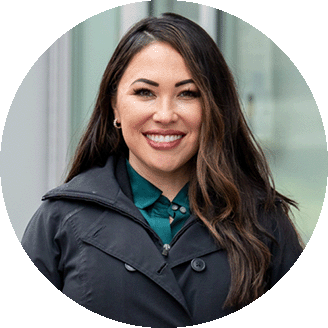
Toshiko Hasegawa
Rating: Aligned
votetoshiko.com
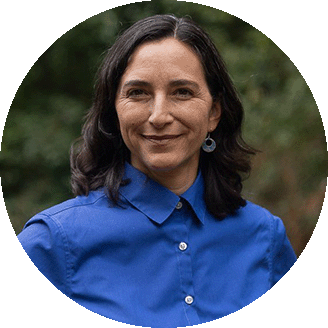
Rebecca Saldaña
Rating: Somewhat aligned
rebeccasaldana.com
Question 1
Taxes & Affordability: Tax burdens have increased and shifted as new levies have been adopted and commercial property values have declined. How would you limit the growing burden on residents and businesses while maintaining a sustainable County budget?
» next / all
Toshiko Hasegawa
Families and businesses are already struggling with rising costs, while declining commercial property values put additional pressure on residential taxpayers. We cannot respond to every budget challenge by asking them to pay more.
First, we need greater value from existing dollars. I support Executive Zahilay’s base-budget reviews, savings officers, stronger financial controls and tying contracts to measurable outcomes.
We also need to grow the tax base. A healthy downtown, thriving businesses, new housing and job growth generate public revenue. So does helping people become self-sufficient. Connecting people to housing, health care and jobs reduces costly cycling through courts, jails and emergency systems while enabling more people to participate in our economy.
King County voters are generous, but government owes them accountability. I support levies that make crystal clear how dollars will be spent and how results will be measured.
We also need alternatives to repeatedly raising regressive property taxes. I would explore a public development authority that leverages surplus County property and bonding capacity to finance housing, child care and other infrastructure. Over time, it could support low-interest business lending and potentially public banking, generating revenue while investing in our economy.
Fiscal responsibility means spending wisely, growing the tax base and leveraging public assets before asking taxpayers for more.
Rebecca Saldaña
We need a sustainable County budget, but we cannot solve every budget problem by asking residents and businesses to pay more. I will start by making sure we are using existing dollars effectively, measuring outcomes, eliminating duplication, and focusing resources on the services only the County can provide.
At the same time, King County has a structural problem: state law limits annual property-tax revenue growth to 1%, while the costs of providing essential services grow faster. I have consistently supported making our tax system more progressive. In the Legislature, I helped pass the capital gains tax and co-sponsored the Millionaires Tax because I believe new revenue should come from those with the greatest ability to pay rather than increasing regressive taxes that hit working families and small businesses hardest.
A strong tax base also depends on a strong economy. Filling vacant storefronts and offices, building more housing, improving public safety and behavioral health, and delivering reliable transit are not separate from fiscal policy — they are essential to rebuilding the economic activity that supports County services.
Question 2
Economic Competitiveness: What specific policies would you support to help existing businesses grow and recruit new businesses, jobs, and investment to Seattle and King County?
» next / « previous / all
Toshiko Hasegawa
I’ve committed my career to growing our regional economy. As a Port Commissioner, I’ve supported businesses of all sizes, expanded family-wage jobs, improved worker benefits, and invested in transportation, child care and workplace infrastructure that helps workers and businesses thrive.
Competitiveness also requires anticipating where the global economy is going and positioning our region to lead it. Through my Teal New Deal at the Port, we’ve laid the groundwork to activate industrial lands, particularly in SODO, for clean-energy manufacturing and future supply chains. Regardless of federal policy, global demand for sustainable fuels, clean maritime technology, electrification and low-carbon goods is growing. We have the workforce, infrastructure and global trade connections to compete for that investment and create generational jobs.
King County should be an active partner. It has already joined the Port in exploring Sustainable Aviation Fuel. We should build on that model to attract investment, develop local supply chains and connect residents to apprenticeships and family-wage careers.
The County must also deliver the fundamentals a thriving economy depends on: transit, housing, child care, public health and functional infrastructure.
I’ll bring the same partnership and urgency I’ve brought to the Port: help existing businesses succeed, compete for industries of the future, and ensure the prosperity we create reaches the people who live here.
Rebecca Saldaña
Our region’s greatest competitive advantage is our people. Businesses want to locate where they can find skilled workers, where employees can afford to live, and where transportation, infrastructure and public services work.
I would focus on the fundamentals: reliable transit; more housing at all income levels; childcare that allows parents to work; safe and welcoming neighborhoods; strong behavioral health services; and infrastructure that supports both small businesses and major employers. I also want government to be a better partner — coordinating permitting and infrastructure investments across jurisdictions, reducing unnecessary delays, and giving businesses greater predictability.
King County should pursue growth that creates family-wage jobs, apprenticeships and career pathways while supporting small and locally owned businesses. We should also leverage our strengths in technology, life sciences, clean energy, maritime and advanced manufacturing to attract investment and build the workforce those industries need.
Question 3
Behavioral Health & Homelessness: How should King County improve its response to behavioral health and homelessness, including delivering on Crisis Care Centers and Health Through Housing, and through its relationship with KCRHA, while serving more people at lower cost?
» next / « previous / all
Toshiko Hasegawa
I served on Executive Zahilay’s Breaking the Cycle committee and support his approach because homelessness, untreated behavioral-health conditions, addiction and repeated involvement with the criminal legal system cannot be solved in separate bureaucratic silos. The County must make sure its public health, behavioral health, housing and criminal legal systems are working together toward better outcomes.
I support a regional approach to homelessness, but regionalism cannot mean maintaining the status quo. I appreciate the cautious approach Executive Zahilay and Mayor Wilson have taken toward KCRHA given its failures in financial management, accountability and delivery. We need transparent spending, clear performance expectations and measurable outcomes.
We must deliver the Crisis Care Centers, improve Health Through Housing, and recognize the criminal legal system as part of this continuum. I’ve called for deeper investment in collateral-consequences attorneys (public defenders who address circumstances beyond the immediate criminal case and connect people to housing, treatment, health coverage, employment and other supports) that reduce repeated system involvement.
Every County investment should pull in the same direction: toward stable, prosocial and autonomous lives. Success means fewer people cycling through emergency rooms, shelters, jails and courts, and more people contributing to our economy.
Rebecca Saldaña
People experiencing homelessness or behavioral health crises need a system that actually helps them move toward stability, and taxpayers deserve to know that their dollars are producing results. We need to deliver the full network of Crisis Care Centers and make Health Through Housing work effectively, with clear expectations for providers and measurable outcomes around treatment, housing stability and transitions to permanent housing.
I have consistently believed homelessness requires a regional response because people do not stop needing services when they cross a city boundary. As Seattle and King County take back responsibility for service contracts from KCRHA, we should preserve strong regional coordination while establishing much clearer responsibility, fiscal oversight and accountability for results.
That means common performance measures and transparent reporting, stable and accountable contracts with providers, and better coordination among outreach, shelter, behavioral health, hospitals and permanent housing. We should spend less time navigating administrative systems and more resources helping people get indoors, receive the treatment and services they need, and move toward long-term stability.
Question 4
Metro: What would you do to prevent further deterioration of Metro service and deliver safe, clean, frequent, and reliable transit, particularly Downtown and on Third Avenue?
» next / « previous / all
Toshiko Hasegawa
Reliable transit is basic economic infrastructure. If everyday people can’t depend on Metro to get downtown safely and on time, that is both a transportation problem and an economic-development problem.
My priorities are frequency, reliability, cleanliness and safety. In a constrained budget environment, I would prioritize maintaining frequent service and the system we have before expanding commitments we cannot operationally sustain. People need access and dependability.
Regarding downtown and third ave: It is one of the single most vital transit corridors. I support the work underway with the Downtown Seattle Association and other partners to make Third Avenue safe, welcoming and functional!
Regionwide, we need frequent routes, better transfers, last-mile connections like Metro Flex where appropriate, and strong coordination with Sound Transit. We should also protect investments that keep our regional transit network connected and functional.
The standard should be simple: when people choose transit, it should be safe, dependable and accessible.
Rebecca Saldaña
Metro is essential infrastructure for our economy. Workers need to know their bus will arrive, businesses need customers and employees to be able to reach them, and Downtown cannot succeed without a safe and reliable transit system.
As Vice Chair of the Senate Transportation Committee, I worked on major investments in transit and multimodal transportation. On the County Council, I would prioritize the basics: maintaining service, recruiting and retaining operators and mechanics, improving reliability and frequency on our highest-ridership routes, and keeping buses and transit facilities clean and safe.
Third Avenue requires particular attention because it is both one of our most important transit corridors and a front door to Downtown. King County cannot solve its challenges alone. I would work directly with Seattle, Metro, law enforcement, behavioral health providers, businesses and community organizations on a coordinated strategy that combines transit security and consistent maintenance with outreach, treatment and crisis response. Riders and operators should feel safe, and businesses should be able to succeed along our region’s most important transit corridor.
Question 5
Civic Campus: What is your vision for King County’s Downtown civic campus, and how would you finance its redevelopment while minimizing costs to taxpayers?
» next / « previous / all
Toshiko Hasegawa
The Civic Campus is one of King County’s biggest opportunities to reshape downtown for the next generation. The County controls roughly eight acres of extraordinarily valuable public land, much of it occupied by aging or underutilized buildings. We should not spend hundreds of millions of taxpayer dollars preserving an obsolete footprint simply because that’s what we’ve always had.
I want a civic campus that is active day and night, reconnects Pioneer Square and the CID with downtown, improves public safety through activity and thoughtful design, creates housing and public spaces, and provides modern facilities for County employees and residents.
My experience as a Port Commissioner overseeing billions of dollars in public capital investments uniquely prepares me for this work. I would approach the Civic Campus not simply as a County capital project, but as a major real-estate and public-private development opportunity. We should evaluate ground leases, joint development, consolidation of County functions, redevelopment of surplus property, and partnerships that leverage the value of public land to finance public improvements.
The goal is to unlock the value of these assets rather than send the bill to taxpayers. Done right, we can reduce long-term facilities liabilities, generate permanent economic activity, and build a civic center worthy of our region.
Rebecca Saldaña
The civic campus is an extraordinary public asset that should contribute much more to Downtown than it does today. King County controls roughly eight acres and ten sites in the heart of the city; under current zoning, those properties could accommodate substantial new development, including thousands of homes if developed residentially.
I support transforming the campus into a mixed-use neighborhood that brings housing, workers, businesses and activity to this part of Downtown throughout the day and evening, while providing safe, modern facilities for essential County functions. That redevelopment should strengthen connections among Pioneer Square, the Chinatown-International District, Yesler Terrace and the rest of Downtown — a direction the County has already established for the campus.
I would explore long-term ground leases, public-private development partnerships, disposition or redevelopment of underused assets, and leveraging the value of County-owned land to help finance necessary public facilities. Any agreement should protect the public’s long-term interest and be judged on lifecycle costs, not simply the cheapest upfront option.
Question 6
Housing: What specific policies or policy changes would you pursue to increase housing supply of all types in Seattle?
« previous / all
Toshiko Hasegawa
PSRC projects our region will grow by another million people by 2035. We are already behind the curve on housing production, and much of that growth will be concentrated in King County. We must build with urgency: affordable, workforce, market-rate and supportive housing, community land trusts, AND pathways to homeownership. No single housing type can meet the diverse needs of our communities. I also land banking today around future transit stops.
King County MUST improve its processes to make housing faster and less expensive to build. I support eliminating duplicative design-review requirements, including unnecessary reviews when subdividing lots, and establishing firm, reasonable permitting timelines (specifically, 10 days). I also want permitting staff available in person so applicants can resolve issues rapidly during the design phase.
Housing policy must also prevent homelessness. Eviction prevention and relocation assistance cost far less than helping a family rebuild after losing its home. Regarding displacement, my Right to Return policy would create pathways to homeownership for families displaced from communities they helped build, and I support expanding community land trusts to preserve affordability permanently.
Downtown demonstrates why supply matters: new housing supports transit, businesses and our tax base. We need to keep building – and ensure people at every income level have a place in our region.
Rebecca Saldaña
We need substantially more housing at every income level, and we need to make it easier and faster to build it. Seattle has already expanded middle-housing opportunities, and the next phase of its growth strategy contemplates additional housing in neighborhood centers and along frequent transit corridors. King County should be an active partner in making that growth successful.
I would focus County resources on infrastructure and transit that unlock housing growth, put surplus and underutilized public land into productive use, and coordinate with Seattle to reduce unnecessary permitting and infrastructure delays. Near major transit investments, we should allow substantially more housing and ensure a meaningful share is affordable so that people at different incomes can benefit from the public investment.
For households the private market cannot serve, government has to do more. I support using public land, bonding capacity, acquisition and preservation funding, community land trusts, social housing and partnerships with nonprofit developers to produce and preserve permanently affordable homes.
My goal is not one type of housing or one type of neighborhood. We need apartments, condos, townhomes, family-sized homes, workforce housing, supportive housing and deeply affordable housing — and a regional strategy that produces enough homes to meet the scale of the need.