News
PSBJ: A sleeping giant in Seattle
Posted on
This article was originally published by the Puget Sound Business Journal on June 24, 2024.
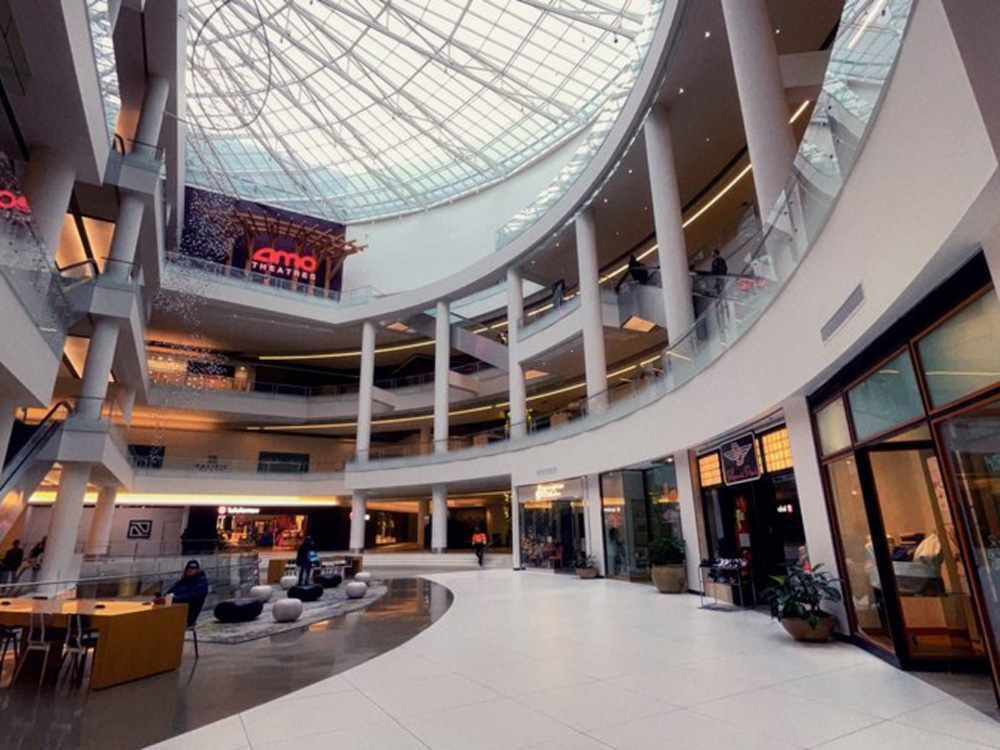
Pacific Place might be the catalyst to kick-start downtown Seattle’s retail scene. But right now, more than half of the mall sits vacant.
Downtown Seattle’s largest mall — built as part of the city’s urban renewal efforts of the ’90s — sold last month for $88.25 million, about a quarter of its value a decade ago.
When Pacific Place changed hands in 2014, it was nearly full. Today, it’s 55% vacant. That’s one symptom of what Jennifer Seversen, who’s been leasing retail properties in and around downtown Seattle for decades, calls the “quintuple whammy” that hit downtown Seattle retail in the aftermath of the pandemic.
“Covid hit,” she told the Business Journal in May. “The cruise ships stopped running. The convention center was under construction. You had a tech-heavy workforce that didn’t come back right away. And then Pacific Place emptied out. All five of those things took customers away.”
What followed was an exodus of retailers and restaurants at both the city’s marquee retail properties and at the ground level of offices and residential buildings.
A record summer for recreational tourism and the opening of the convention center’s Summit addition last year couldn’t curb the trend. Several national brands left downtown as office worker foot traffic continues to lag and fewer Seattle residents make regular visits to the city’s urban core.
The most recent departures include Nike, The North Face, Carhartt, Lululemon and Vans. Those closures bring a slew of negative attention to an area of Seattle that’s already struggling with public safety concerns, exacerbating the challenge of convincing other retailers to invest there.
Downtown Seattle can still deliver, Seversen said, but jumpstarting the area’s overall recovery starts with filling downtown’s largest mall.
“I think Pacific Place is the engine, and we need to see the key turn,” she said. “If you fill up the mall, it just leaks out. … It’s got a garage, it’s got security. It’s got all the things that are attractive to retail. We need to see some leases signed and some announcements made.”
State of retail in downtown Seattle
Retail properties in the Central Business District have a vacancy rate of 13.5% in 2024, totaling more than 170,000 square feet of available space, per CoStar. That’s up from 1.6% and 48,000 square feet in 2019.
That figure doesn’t include retail spaces in mixed-use buildings such as office towers, hotels and apartment buildings. A Downtown Seattle Association survey shows 543 vacant storefronts across downtown neighborhoods, as of March — a vacancy rate of about 20%.
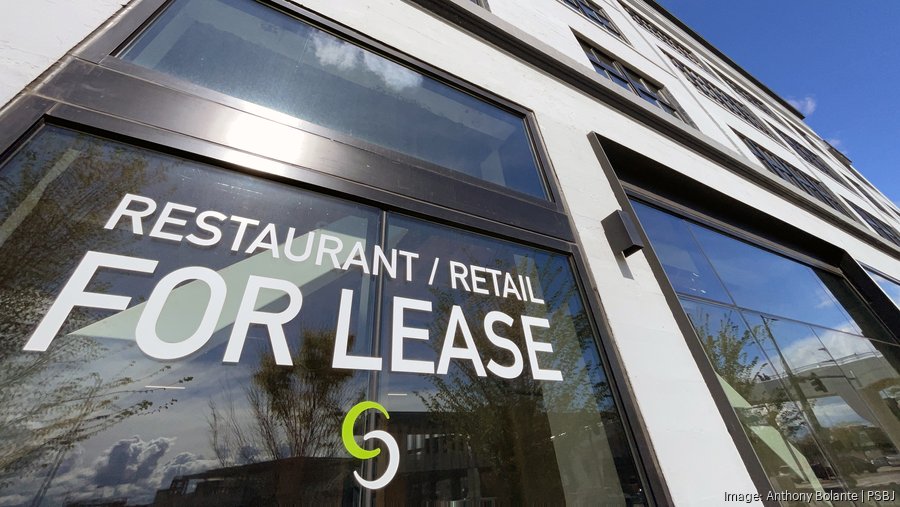
“We’re in a period clearly of rebuilding,” DSA President and CEO Jon Scholes said in March. “We still have a lot of work left to do and a lot of spaces to fill.”
In response, the mayor’s office has put together a program called Seattle Restored, which works with small business owners and artists to fill empty storefronts. So far, there have been more than 75 pop-ups and other events. Five of them have led to long-term leases downtown, with more expected to sign leases soon.
“I think we need to put it on steroids and take it to the next level in downtown, and really make sure that property owners are aware of it and know that there are dollars available for some of these (tenant improvements) because that’s the real potential barrier of somebody taking a risk on a tenant and investing a lot of capital,” Scholes said.
While there’s a shared sense of urgency to fill downtown’s vacant spaces, the process has to be intentional, Kelly Gaddis of Kidder Mathews said.
Gaddis represents the Columbia Center, which has several open retail spaces. That’s largely because the area lacks sufficient lunchtime business to sustain a full roster of tenants, he told the Business Journal in May. Tuesday through Thursday, the building is about 60% full, he said.
Until more office workers are back in greater forces, those storefronts will remain empty.
Continued caution on consumer spending is another point of concern, Jason Miller with Kidder Mathews said in a report.
“Whenever inflation comes down and office workers return to the office is when we will start to see some improvements,” he said.
However, as foot traffic in downtowns continues to lag, national retailers are still preferring Seattle’s suburban markets.
Last year, Bloomingdale’s made its Seattle debut with a smaller-concept store at University Village. Shortly after Nike closed downtown, it opened a smaller store at Bellevue Square. Similarly, Carhartt left downtown for a location at The Landing in Renton.
“It’s what they know,” said Taylor Alvey, vice president of leasing for Vestar, which owns The Landing in Renton. “Unless the downtown area has a more traditional mall that they’re comfortable with that’s stable, that might be a little bit different. But for the overwhelming majority, they like the suburban market. That’s their customer. That’s where they live.”
Seversen, who has experience leasing at neighborhood centers like University Village and downtown ones such as Westlake Center, said the Seattle market has long been strong enough for brands to have both suburban and urban stores. She cited Pottery Barn, which debuted at University Village before opening at Pacific Place when the mall opened in 1998.
“They had a 10% sales dip at U Village, but they gained it all back and then some a year later,” she said. “So I’m looking at downtown and I say the healthier U Village is, the more of a story there is that you need a store in downtown, but you need a store in downtown when downtown is back.”
She hopes Pacific Place, which is anchored by Din Tai Fung and an AMC Theatres, can land another U Village tenant.
“Apple has been looking for space in downtown Seattle for 20 years,” she said. “If I’m Pacific Place, I do whatever it takes to get it done at Sixth and Pine.”
Reviving shopping hubs
Despite the apparent declining value of retail assets and the departure of some national brands, there have been signs of life in the city’s retail recovery.
For one, BH Properties, the new owners of Pacific Place, has pledged to attract “local, regional, and national retailers to deliver a first-class shopping experience with a uniquely Seattle flavor,” bringing in a new firmwide managing director of retail to lead the effort.
Since 2021, about 250 street-level storefronts have opened downtown, according to DSA data. That includes larger investments from brands such as Uniqlo, Pendleton, Arc’Teryx, Ben Bridge Jeweler and Himali. High-profile restaurants and experiential retailers are filling other vacancies.
At 600 Union St., Seversen represented the Sheraton Grand Seattle when it listed the former Loulay’s space. It took just 60 days to lease the 4,000-square-foot restaurant, set to reopen as Vivienne’s Bistro later this summer.
“On the right corners, in the right locations, it’s coming back,” she said.
Nearby, international steakhouse chain Fogo de Chao will soon open a 9,000-square-foot restaurant at 400 University @ Rainier Square office building, located next to the new 58-story Rainier Square mixed-use tower.
In Pioneer Square, James Beard Award-winning chef Renee Erickson has leased 12,000 square feet at the former F.X. McRory’s space where she is set to open three restaurants, as part of the new RailSpur redevelopment in 2025.
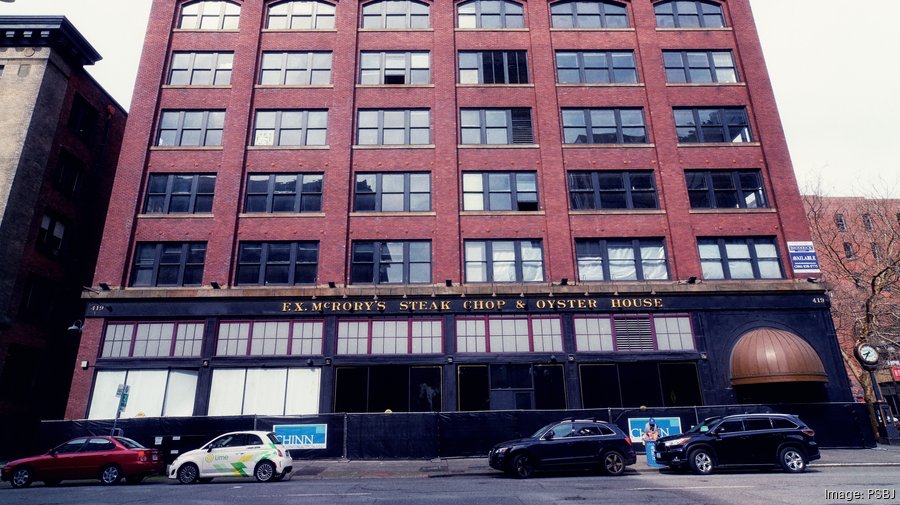
The recent closures of RailSpur’s existing retailers — a beer shop, coffee shop, bike club and taqueria after less than two years in business — highlights the industry’s fickle nature.
As the city attempts to recruit companies into those marquee spaces, concerns about the street scene and public safety perceptions loom large.
Scholes said addressing those issues means “getting back to the basics of what is necessary for a thriving downtown retail district.”
One of Seversen’s listings is the 18,000-square-foot former Hard Rock Cafe space on First Avenue and Pine Street.
“I see some of the negatives,” she said. “We’ve had to move people out of the vestibule when we’ve had a showing.”
When talking with large national brands, she said the city’s reputation is still held higher than those of nearby cities like San Francisco and Portland.
“When I call and I say what about downtown Seattle, they don’t say ‘Oh, hell no.’ They say, ‘Yeah, it’s on our radar,’” she said.
Perceptions about safety and crime are also part of what’s kept locals from visiting downtown in recent years, Scholes said. Winning them back is equally as key to the city’s recovery, he added.
The soon-to-be-complete waterfront restoration project provides an opportunity to do that.
“We’re going to have a bunch of people that come down to experience that project that maybe haven’t been down in quite some time,” Scholes said. “It’s going to bring a lot of people back into downtown and then hopefully they spend time and money elsewhere and have other experiences.”
Once those hurdles are cleared, the city can focus on delivering unique experiences that draw locals and visitors alike. That includes major attractions such as the waterfront and the FIFA World Cup in 2026.
It should also inform how the city’s retail spaces are used, mixing places people can eat, shop, drink, craft and more.
“Safe and clean is the baseline and fundamental,” Scholes said. “Beyond that, it’s delightful, interesting, so unique that you can’t get it in other places so that you’re going to come out of your neighborhood, you’re going to come offline. That’s how downtowns win the game relevancy.”