News
The Registry: Downtown Seattle Hits 109,845 Residents and 317,000 Jobs as Urban Core Recovery Accelerates
Posted on
This story was originally publshed by The Registry on March 12, 2026.
The Downtown Seattle Association’s 2026 Economic Report and State of Downtown event show foot traffic, visitor counts, and public safety metrics improving across the urban core, as city and county leaders pledge investments in housing, safety, and transit.
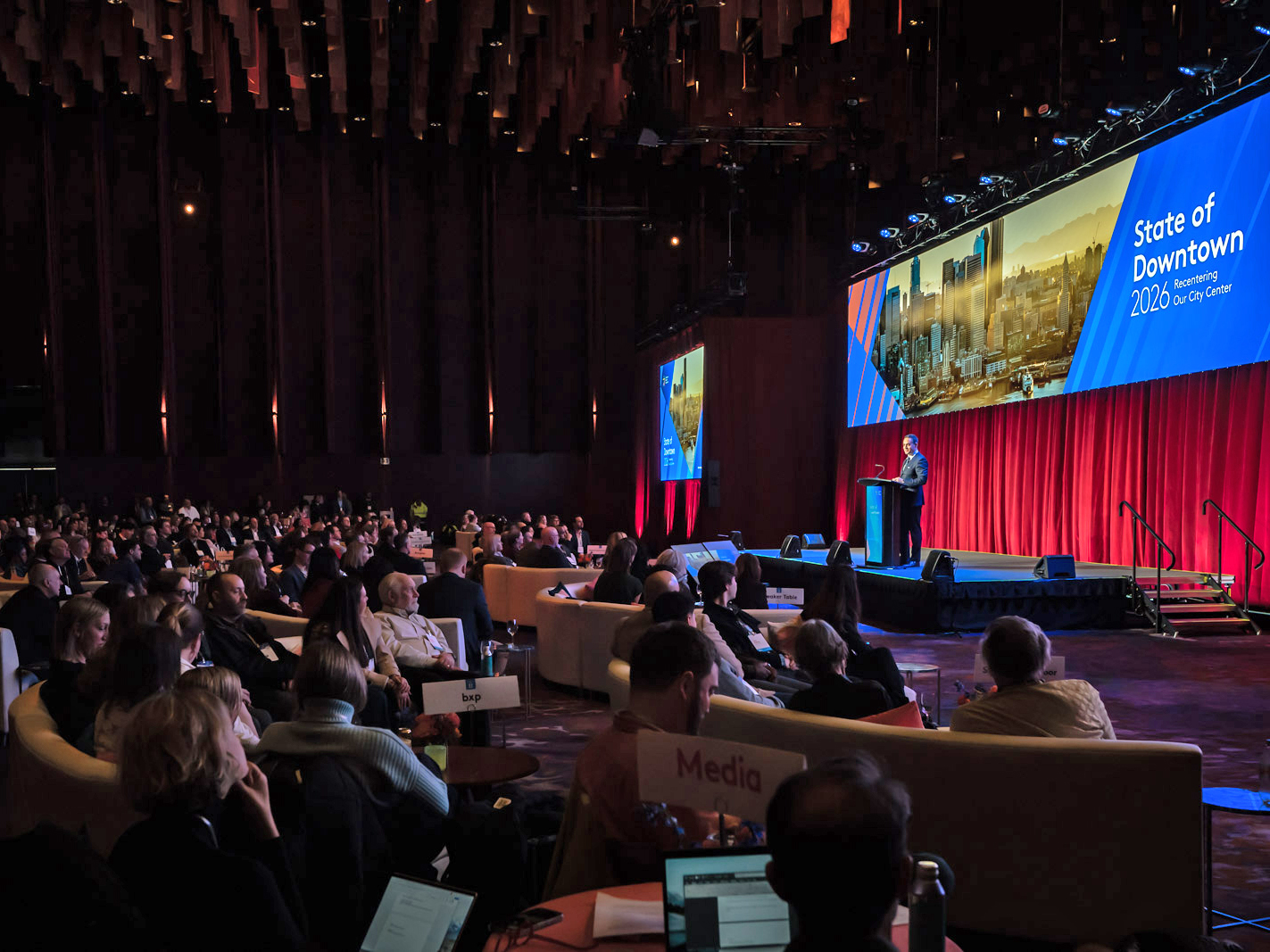
Downtown Seattle’s urban core continued to build momentum throughout 2025, adding residents and jobs while drawing more than 15 million unique visitors for the second consecutive year, according to the Downtown Seattle Association’s 2026 State of Downtown Economic Report released in cooperation with the Metropolitan Improvement District. The findings were presented at the association’s State of Downtown event, where top city and county leaders outlined their priorities for sustaining the recovery.
The report estimates that the residential population in downtown has grown 80 percent since 2010, reaching approximately 109,845 residents. Total employment across the urban core climbed 45 percent over the same period to more than 317,000 jobs, according to data from the Puget Sound Regional Council and the Washington State Employment Security Department. Average weekday worker foot traffic reached roughly 145,000 in 2025, a nearly 4 percent increase compared to 2024, though this figure still represents only 64 percent of the daily worker activity recorded in 2019, the report noted.
At the event, King County Executive Gurmai Zahalai highlighted the positive trajectory while acknowledging the concerns he is hearing from the business community. Zahalai said he is working with downtown business owners who identify public safety and homelessness as their top concern. City leaders at the event signaled plans to invest in more affordable housing, child care, and transportation infrastructure to address those issues.
Seattle Mayor Wilson used the event to articulate a broader urban vision for downtown. “My vision of urbanism means thriving walkable neighborhoods, welcoming public spaces, transit that gets people where they want to go and connects them to opportunity and arts and culture, small and local businesses that give a place its soul,” Wilson said. She described downtown as a model of how that vision comes together, adding that it can demonstrate what a growing, thriving Seattle can look like. Last week, Mayor Wilson announced a push for 1,000 new units of shelter and emergency housing.
The visitor economy proved to be a particularly strong indicator of downtown’s recovery. Unique visitors totaled approximately 15.3 million in 2025, essentially flat year-over-year but representing 102 percent of the pre-pandemic benchmark set in 2019, according to Placer.ai data cited in the report. More notably, total visits rose by 3 million, suggesting that the frequency of trips downtown is increasing even as the overall visitor base has stabilized.
Local visitors — defined as people living within 10 miles of downtown — also contributed meaningfully to the recovery. The report found that local visitor foot traffic increased nearly 3 percent compared to 2024 and reached 92 percent of the level observed in 2019. Along the Pike/Pine corridor, a key retail stretch bookended by Pike Place Market and the Seattle Convention Center Summit building, locals made more than 8.3 million visits in 2025, an 11 percent increase over the prior year. The report attributed spikes in activity to events such as Sakura-Con, Emerald City Comic Con, the city’s Pride parade, and the No Kings protest in October.
The waterfront emerged as another area of significant growth. Local visitor foot traffic to the waterfront climbed 11 percent year-over-year, reaching 97 percent of 2019 levels, according to the report. July 26 marked the busiest single day of waterfront foot traffic since at least 2019, driven by the return of the Alaska Airlines Seafair Torchlight Parade and nearly 100,000 attendees.
In the stadium district, Lumen Field and T-Mobile Park drove a more than 7 percent increase in visitor foot traffic as the venues hosted major concerts, FIFA Club World Cup matches, and games for the Mariners, Seahawks, Sounders, and Reign, the report stated.
Public safety data presented a mixed picture — and one that resonated with the concerns raised by business owners at the State of Downtown event. Violent crime incidents across downtown overall were essentially flat compared to 2024 but remained 14 percent below the pandemic-era peak of nearly 1,600 incidents recorded in 2021, according to the Seattle Police Department Crime Dashboard. The downtown core specifically experienced its lowest number of violent incidents since at least 2017, excluding 2020, with a 14 percent decline from the prior year and a 33 percent drop from the post-pandemic high.
However, not all neighborhoods shared in the improvement. Belltown recorded its highest number of violent crime incidents since at least 2020, a 24 percent increase compared to 2024, the report found. Chinatown-International District saw a slight decline in violent incidents but remained at elevated levels, again surpassing 300 incidents for the year. Together, those two neighborhoods accounted for more than a third of downtown’s total violent crime, according to the report.
On the commercial side, not all sectors have fully recovered. Brick-and-mortar retail employment has declined 14 percent since 2010, falling to an estimated 7,575 jobs, the report noted. Hotel demand experienced a modest decline in 2025, reflecting continued weakness in international visitors and convention and business travel. In contrast, jobs in dining, hospitality, recreation, arts, and entertainment grew 23 percent since 2010 to approximately 33,600 positions.
Looking ahead, the report highlighted several catalytic events and infrastructure investments poised to further strengthen downtown in 2026 and beyond. The FIFA World Cup is projected to generate $929 million in regional economic impact when Lumen Field — temporarily rebranded as Seattle Stadium — hosts 6 matches between June 15 and July 6, drawing an estimated 750,000 visitors and supporting more than 20,000 jobs, according to projections from Visit Seattle.
Sound Transit’s Link light rail extension connecting Seattle and Bellevue is scheduled to open on March 28, establishing a new cross-lake transit connection through the International District/Chinatown Station. The Elliott Bay Connections waterfront project, backed by more than $45 million in private funding, is nearing completion and will deliver new bike and pedestrian paths, expanded beaches, and additional amenities across a 50-acre, 3.5-mile stretch along Elliott Bay, according to the report.
Seattle’s professional sports landscape is also expanding its footprint. The city became the first in the United States to host 3 professional women’s sports teams — all based downtown — with the debut of the Seattle Torrent in the Professional Women’s Hockey League at Climate Pledge Arena, where the team has averaged more than 11,000 fans per home game, the report stated. Meanwhile, the $150 million reconstruction of Memorial Stadium at Seattle Center is underway, with a new 6,500-seat multipurpose venue expected to open in fall 2027.
The confluence of rising residential population, strengthening visitor activity, major infrastructure investment, and global sporting events positions downtown Seattle for what the Downtown Seattle Association described as a period of unprecedented opportunity. With city and county leaders pledging new investments in housing, public safety, and urban livability, the path forward will depend on whether that momentum can extend beyond the core and into neighborhoods still grappling with persistent challenges.