News
State of Downtown highlights Seattle’s momentum, challenges ahead
Posted on
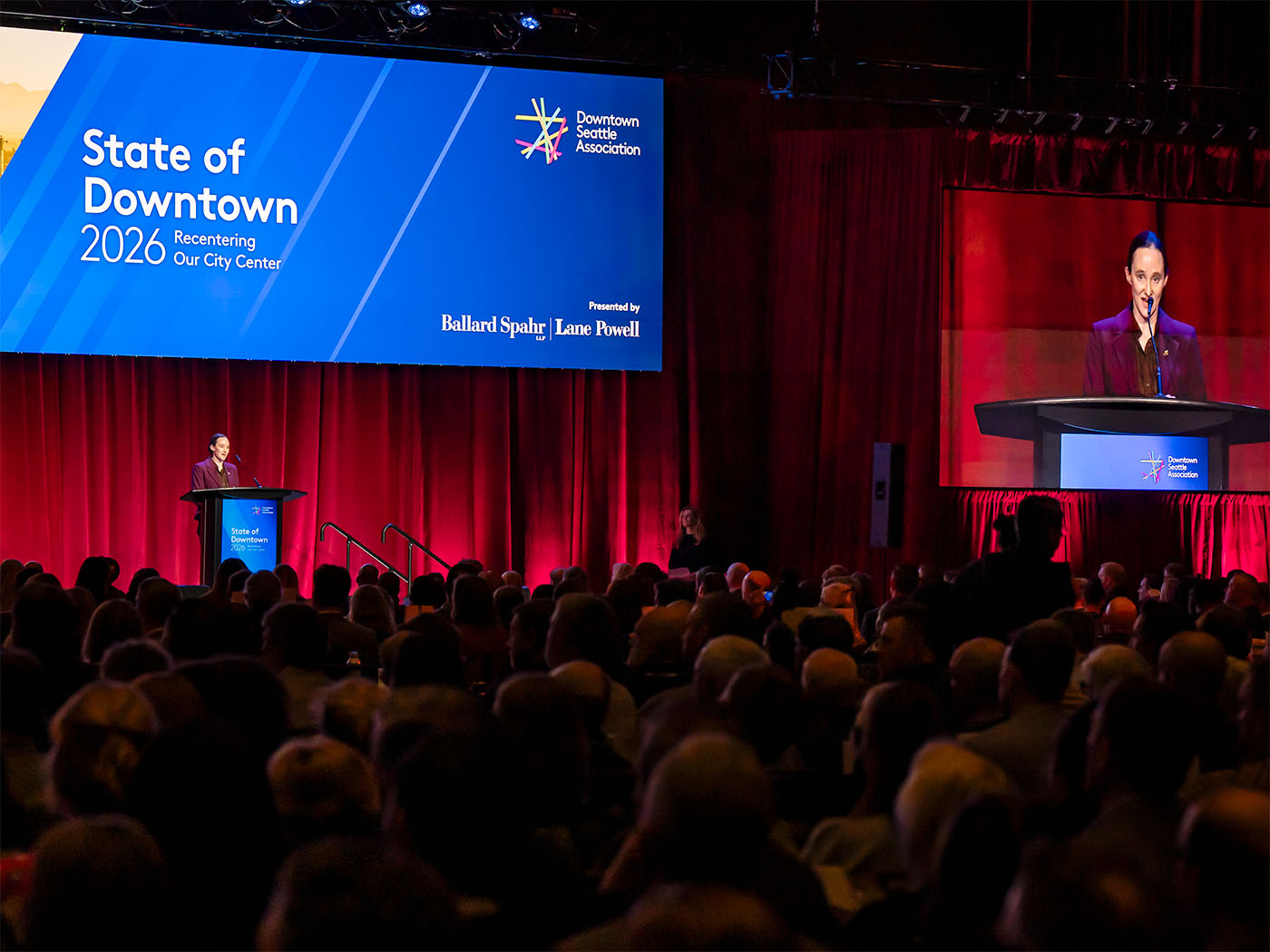
More than 1,200 DSA members, business, civic and community leaders came together on March 11 at the Seattle Convention Center for the Downtown Seattle Association’s 21st annual State of Downtown — a signature moment to take stock of progress and align on what comes next for the city center.
The theme of this year’s program, presented by Ballard Spahr Lane Powell, was Recentering Our City Center, reflecting both the measurable momentum in downtown Seattle and the shared responsibility to sustain and accelerate that progress.
In his annual address, DSA President & CEO Jon Scholes emphasized the dual reality shaping downtown today: meaningful gains across key indicators alongside persistent economic and structural challenges that require coordinated action.
“Downtown Seattle has experienced a healthy amount of momentum over the past year,” Scholes said. “More people are living here, visiting more often and returning for arts, sports and major events. Public safety trends in the downtown core are moving in the right direction. But we can’t ignore the real challenges we face — from job losses and office vacancy to homelessness. The issues downtown faces affect the entire city and region.
“This is a defining moment to double down on what’s working, confront what isn’t and ensure our urban core remains one of the most innovative and dynamic in the country.”
Attendees also heard remarks from Seattle Mayor Katie Wilson and King County Executive Girmay Zahilay, both of whom underscored the importance of partnership across the public and private sectors to address shared priorities, including public safety, economic vitality and long-term competitiveness. Both Scholes and Wilson addressed the ongoing conversation around business taxes, with Scholes emphasizing, “We don’t need more business taxes in Seattle; we need more businesses paying taxes in Seattle,” a point he expanded on in a recent Puget Sound Business Journal op-ed.
“I very much appreciate that it is not ideal for our tax environment, for businesses to be wildly out of step with neighboring jurisdictions,” Wilson said at State of Downtown. “And I will be keeping that in mind as we look at options. My administration is committed to engaging with DSA and other business stakeholders when we get to the point of discussing specific options.”
Keynote speaker Derek Thompson — journalist, author and podcaster — offered a national perspective on the evolving role of downtowns, challenging attendees to think boldly about how cities adapt in a post-pandemic economy where work patterns, mobility and consumer behavior continue to shift.
A central component of the program was the release of DSA’s annual Economic Report, presented by Mortenson, which provided a data-driven look at downtown’s recovery.
Nearly 110,000 people (109,845) now call downtown home — roughly one in seven Seattle residents. Downtown’s residential population has grown 53% over the past decade and 80% since 2010. In 2025 alone, more than 1,600 multifamily units were delivered downtown, with another 3,300 under construction. Nearly half of all housing built in Seattle since 2019 has been concentrated in the city center.
Other highlights from the report shared during the program include:
- More than 15 million unique visitors in 2025, surpassing pre-pandemic levels for the second consecutive year.
- Total visits increased by 3 million year-over-year, signaling greater frequency.
- Daily foot traffic averaged nearly 145,000 people, up 4% from 2024.
- Light rail boardings at downtown stations rose 23%, topping 9.2 million rides.
- 879,000 theatergoers attended productions at major downtown venues in 2025.
- 63 new street-level businesses opened — nearly half of them restaurants.
- DSA/MID ambassadors delivered 278,466 service hours, a 4% increase year-over-year.
- Violent crime in the downtown core declined to its lowest level since at least 2017 (excluding 2020), with a 14% drop year-over-year and a 33% decline from the 2021 peak.
- Fentanyl-related overdose deaths downtown fell 27% compared to 2024.
At the same time, challenges remain:
- Downtown lost an estimated 13,000 jobs in 2025 — the largest annual decline since the first year of the pandemic.
- Office vacancy remained elevated at 25%, with the central business district exceeding 32%.
- The 10 highest-value downtown office properties have seen assessed values decline by more than 50% since 2021.
- Travelers entering Washington state from Canada at the Blaine border crossing declined 25% year-over-year.
Beyond the formal program, State of Downtown once again served as a critical convening moment, bringing together leaders from across industries to connect, share perspectives and strengthen the partnerships that drive progress in the city center.
The event garnered extensive media coverage, including from The Seattle Times, KUOW, KOMO News and MyNorthwest, to name a few.
With major milestones ahead — including the World Cup, Sound Transit’s new 2 Line Crosslake Connection and the nearly-completed reimagination of Myrtle Edwards and Centennial parks further connecting our waterfront — the event reinforced both the opportunity and urgency of the moment for downtown Seattle.
“Downtown Seattle is the region’s cultural, economic and transit heart,” Scholes said. “2026 gives us the chance not just to propel our progress, but to accelerate it. If we stay focused, collaborative and ambitious, the best days for downtown are still ahead.”