News
Downtown Seattle Shows Momentum at 21st State of Downtown
Posted on
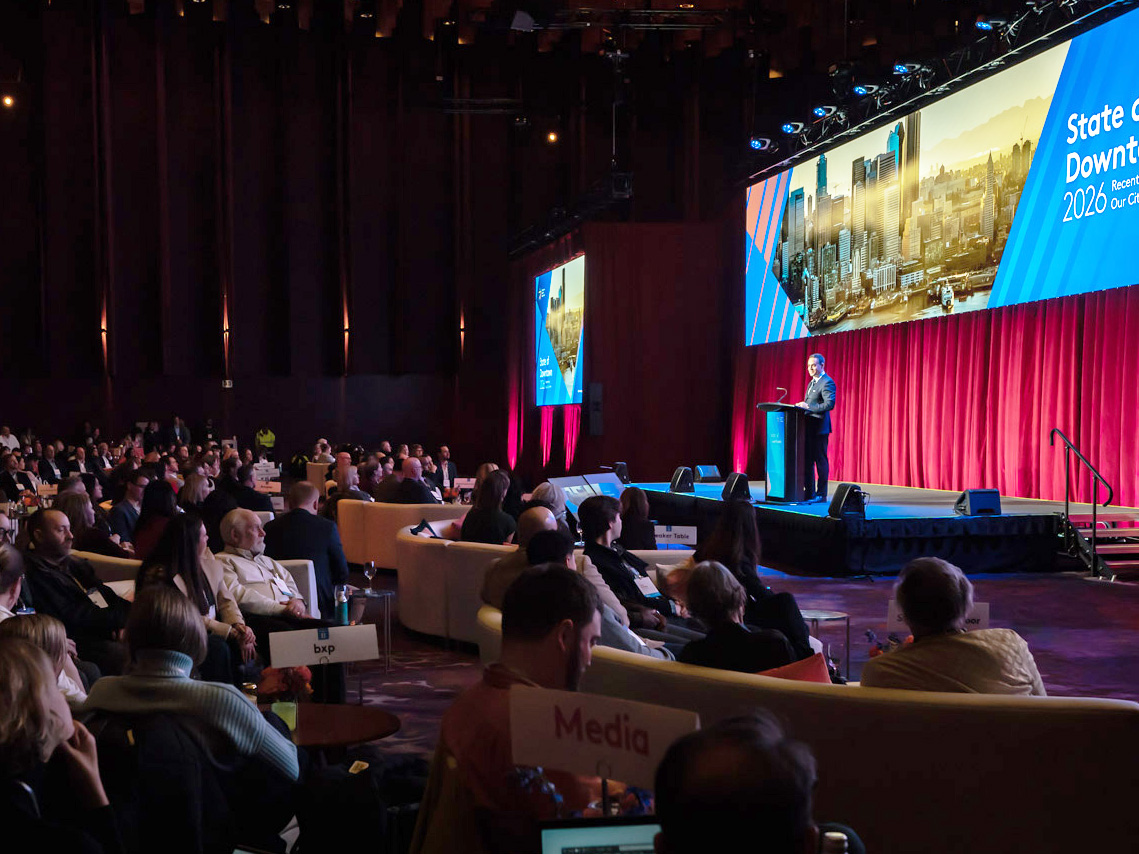
SEATTLE, March 11, 2026 — More than 1,200 business and civic leaders gathered at the Seattle Convention Center Summit building today for the 21st annual State of Downtown to hear the latest storylines and trends from DSA President & CEO Jon Scholes, keynote speaker Derek Thompson, Mayor Katie Wilson, King County Executive Girmay Zahilay and DSA Board Chair Mari Horita.
This year’s theme of State of Downtown, presented by Ballard Spahr Lane Powell, was Recentering Our Center City. At its annual signature event, the Downtown Seattle Association released the 2026 Economic Report, outlining steady gains in visitation, housing growth and public safety improvements, alongside persistent challenges in jobs, office vacancy and international travel.
The Economic Report, presented by Mortenson, paints a picture of a downtown that continues to evolve into a denser, more vibrant mixed-use neighborhood, and one entering a pivotal year.
By the numbers
Nearly 110,000 people (109,845) now call downtown home — roughly one in seven Seattle residents. Downtown’s residential population has grown 53% over the past decade and 80% since 2010. In 2025 alone, more than 1,600 multifamily units were delivered downtown, with another 3,300 under construction. Nearly half of all housing built in Seattle since 2019 has been concentrated in the city center.
Visitation trends also strengthened:
- More than 15 million unique visitors in 2025, surpassing pre-pandemic levels for the second consecutive year.
- Total visits increased by 3 million year-over-year, signaling greater frequency.
- Daily foot traffic averaged nearly 145,000 people, up 4% from 2024.
- Light rail boardings at downtown stations rose 23%, topping 9.2 million rides.
- 879,000 theatergoers attended productions at major downtown venues in 2025.
- 63 new street-level businesses opened — nearly half of them restaurants.
- DSA/MID ambassadors delivered 278,466 service hours, a 4% increase year-over-year.
Public safety trends in the downtown core showed measurable improvement. Violent crime declined to its lowest level since at least 2017 (excluding 2020), with a 14% drop year-over-year in the core and a 33% decline from the 2021 peak. Fentanyl-related overdose deaths downtown fell 27% compared to 2024.
At the same time, challenges remain:
- Downtown lost an estimated 13,000 jobs in 2025 — the largest annual decline since the first year of the pandemic.
- Office vacancy remained elevated at 25%, with the central business district exceeding 32%.
- The 10 highest-value downtown office properties have seen assessed values decline by more than 50% since 2021.
- Travelers entering Washington state from Canada at the Blaine border crossing declined 25% year-over-year.
“Downtown Seattle has experienced a healthy amount of momentum over the past year,” Scholes said. “More people are living here, visiting more often and returning for arts, sports and major events. Public safety trends in the downtown core are moving in the right direction. But we can’t ignore the real challenges we face — from job losses and office vacancy to homelessness. The issues downtown faces affect the entire city and region.
“This is a defining moment to double down on what’s working, confront what isn’t and ensure our urban core remains one of the most innovative and dynamic in the country.”
A global stage in 2026
State of Downtown speakers emphasized that the year ahead represents a unique opportunity for the city center.
This summer, 2026 FIFA World Cup matches will be hosted at Lumen Field, bringing an estimated 750,000 visitors and nearly $1 billion in regional economic impact, per Visit Seattle. The opening of new light rail connections between Seattle and Bellevue later this month will further cement downtown’s role as the region’s transit hub. Meanwhile, major investments along the waterfront — including the Elliott Bay Connections project — continue to reshape public space along the city’s shoreline.
“When people around the world think of Seattle, they picture our skyline, our waterfront and our stadiums. They picture downtown,” Wilson said. “Downtown is home to nearly 110,000 residents, incredible public spaces, a new playground, a great public bathroom and so many other amazing things to do.
“My administration is focused on making our city safer, more affordable and more welcoming by working in partnership with business and community leaders to open 1,000 new shelter beds and address gun violence. Seattle’s downtown is an extraordinary asset, an amazing place to visit and an incredible place to live. And this year it’s going to be better than ever.”
Zahilay emphasized the county’s role in transit and behavioral health investments that directly shape downtown’s trajectory.
“Downtown Seattle is an important epicenter of commerce, entertainment, travel and transit for our region,” Zahilay said. “With the expansion of light rail and continued investments in frequent, reliable transit service, we’re making it easier for residents, workers and visitors to access downtown’s economic and cultural opportunities. At the same time, we know that downtown Seattle’s success depends on maintaining safe, welcoming public spaces and coordinated efforts that better connect our unhoused neighbors to the services and housing they need.
“King County will continue to be a strong partner in addressing the behavioral health, crisis response and housing needs we see on our streets every day, while also investing in a strong transit network for commuters and visitors from around the world this summer.”
The region’s cultural and civic heart
Thompson — a journalist, podcaster and co-author of “Abundance,” — challenged civic and business leaders to think bigger about urban recovery.
“The story of American cities in the 21st century will be written by the places that choose to build: more housing, more transit, more public space, more opportunity,” Thompson said. “Downtown Seattle has extraordinary assets: natural beauty, cultural institutions, innovative employers and a growing residential base. The question is whether we respond to today’s challenges with scarcity thinking or with an abundance mindset — accelerating housing production, investing in safety and public health and making it easier to start businesses and create community. Cities that embrace abundance don’t just recover, they lead.”
Looking ahead, additional milestones — including continued waterfront improvements, major civic projects at Seattle Center and record cruise traffic through the Port of Seattle — are expected to elevate downtown’s national and international profile.
“Downtown Seattle is the region’s cultural, economic and transit heart,” Scholes said. “2026 gives us the chance not just to propel our progress, but to accelerate it. If we stay focused, collaborative and ambitious, the best days for downtown are still ahead.”
View the full Economic Report for more data and information.
###
About the Downtown Seattle Association
Established in 1958, the Downtown Seattle Association is a nonprofit membership organization whose mission is to create a healthy, vibrant downtown for all. By advocating on issues including transportation, economic development and the urban experience, DSA works to ensure that downtown remains a great place to live, work, shop and play for all. DSA also manages the Metropolitan Improvement District, a business-improvement area spanning 300 square blocks downtown.